
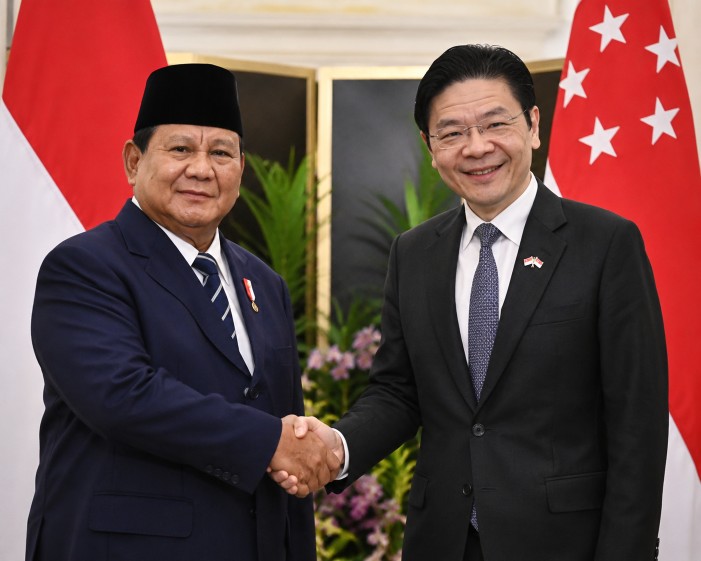
In a move to bolster cross-border electricity exports, Indonesia and Singapore have inked several memoranda of understanding (MoUs) during their annual leaders’ retreat in Jakarta. This development was marked by discussions between Indonesia’s President Prabowo Subianto and Singapore’s Prime Minister Lawrence Wong. The agreements center around Indonesia’s sovereign wealth fund, Danantara, which is collaborating with Keppel Electric, Sembcorp Industries, and Singapore Energy Interconnections, aiming to facilitate electricity trade between the neighboring nations.
Among the key aspects of the agreements, Danantara has also established a roadmap with the Singaporean government, designed to streamline future negotiations and project implementations. Singapore regards this initiative as a pivotal step towards enhancing the ASEAN Power Grid, emphasizing Indonesia’s significant potential in renewable energy. This cooperation includes a notable partnership between Sembcorp, Indonesia’s INA sovereign fund, and renewable energy firm SESNA to develop a substantial solar power project in Central Sulawesi. The project is valued at $210 million and will feature 200 megawatts of solar capacity alongside an 80 megawatt-hour battery storage system.
As negotiations continue regarding electricity pricing, Indonesia is setting the groundwork for future exports to Singapore. For its part, Singapore is on track to import 6 gigawatts of low-carbon electricity by 2035, with approximately 3.4 gigawatts expected to originate from Indonesia. This partnership underscores the mutual benefits of harnessing Indonesia’s renewable resources to meet Singapore’s energy needs.
The collaboration further highlights the strategic importance of regional energy integration. By leveraging Indonesia’s renewable energy capabilities, both countries aim to make significant strides in reducing carbon emissions and promoting sustainable energy solutions across Southeast Asia. This initiative not only strengthens bilateral ties but also contributes to broader regional energy security and sustainability goals.