
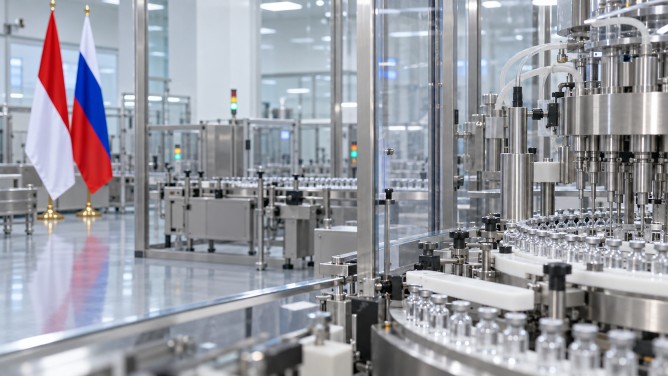
Indonesia and Russia are in discussions to collaborate on pharmaceutical technology transfers, aiming to bolster domestic medicine production and reduce dependency on imports. The talks, which involved Indonesia’s Food and Drug Authority (BPOM) and Russia’s Deputy Minister of Industry and Trade, Alexey Vladimirovich Gruzdev, focused on enhancing pharmaceutical manufacturing capabilities, improving quality inspections, and implementing digital technologies for better product safety and traceability.
A key area of interest for Indonesia is increasing the local production of diabetes treatments, including insulin and glucagon-like peptide-1 (GLP-1) medicines, to enhance accessibility to essential healthcare products. The discussions also covered potential collaborations in cancer treatments, monoclonal antibodies, antiviral medicines, and advanced biotechnology products.
Russian companies have shown interest in transferring technology and possibly setting up manufacturing facilities in Indonesia for insulin, oncology medicines, and biotechnology products. The Russian delegation indicated that several Russian pharmaceutical firms have already submitted product registration documents to BPOM.
Both countries reviewed their existing cooperation on Good Manufacturing Practice (GMP) inspections, technical training, and information sharing. There are plans to finalize a memorandum of understanding to establish a framework for deeper collaboration. Russia proposed the exploration of mutual recognition of GMP certificates to simplify regulatory procedures and facilitate market access in both nations, though further discussions are needed to ensure regulatory compatibility.
To enhance Indonesia’s inspection capabilities, Russia offered technical training, including virtual reality-based simulations for pharmaceutical manufacturing assessments. Discussions also looked into digital regulatory systems and supply-chain monitoring, with both parties expressing interest in continuing negotiations and expanding cooperation through future meetings and visits to pharmaceutical manufacturing facilities.