
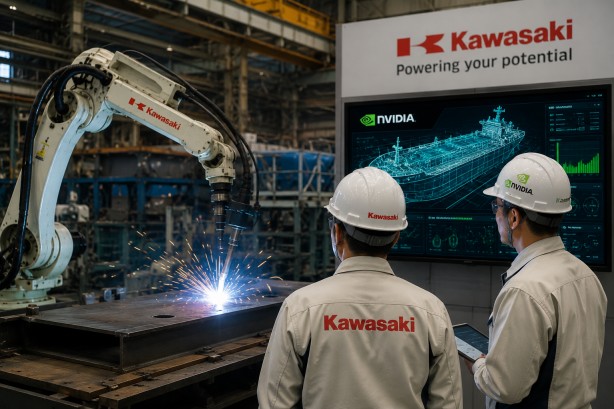
Nvidia has teamed up with Japan’s Kawasaki Heavy Industries in a groundbreaking initiative to introduce AI-powered robotics into the shipbuilding sector. This collaboration aims to revolutionize the industry by integrating automation and cutting-edge digital technologies to create a next-generation digital shipyard. The robots are being developed to handle tasks such as welding, painting, inspection, and material handling, which are essential in ship construction.
The introduction of these AI-powered robots is particularly timely for Japan, which faces a significant labor shortage fueled by an aging population and a dwindling pool of skilled workers. By automating critical processes, the partnership not only seeks to enhance productivity but also supports the construction of environmentally friendly, low- and zero-carbon vessels. This move represents a significant step toward modernizing shipbuilding operations, making them more efficient and sustainable.
Central to the initiative is the combination of physical AI with digital twin technology, which will allow for a more streamlined and precise construction process. Digital twin technology involves creating a virtual model of the shipbuilding environment, enabling better planning, design, and real-time adjustments. This integration is expected to lead to improved outcomes in both the quality and efficiency of ship production.
During a recent visit to Tokyo, Nvidia’s CEO Jensen Huang highlighted the importance of partnerships in fostering innovation. He also took the opportunity to express gratitude to Sega for its pivotal support in the company’s formative years. Sega’s $5 million investment in the 1990s was crucial for Nvidia’s survival and growth, illustrating the long-standing impact of strategic collaborations in the tech industry.