
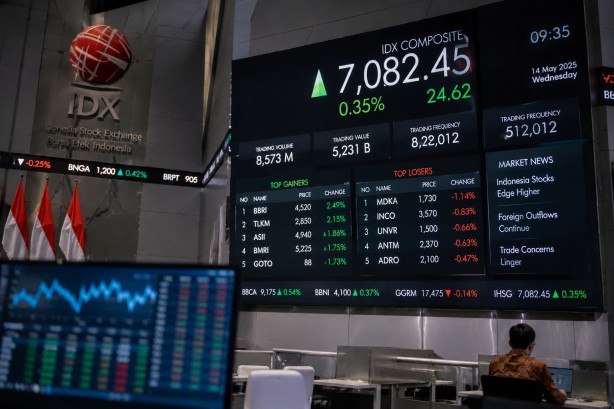
Indonesia’s main stock market index, the Jakarta Composite Index (JCI), experienced a modest increase of 0.34% in the week ending July 24, driven by a boost in trading activity. This rise came despite ongoing foreign investor withdrawals and persistent global economic uncertainties. The Indonesia Stock Exchange witnessed a rise in market capitalization, reaching Rp 10,870 trillion, while the average daily trading turnover saw a significant jump of 41%, climbing to Rp 19.76 trillion.
Despite these positive indicators, foreign investors continued to pull out, maintaining their status as net sellers. The total outflows have accumulated to Rp 79.09 trillion this year, indicating a cautious approach towards Indonesian assets. This cautious sentiment among investors can be attributed to several external factors affecting the market.
One of the major concerns impacting market sentiment has been the rise in global oil prices, spurred by escalating tensions in the Middle East. Adding to the strain, the United States has imposed new tariffs on imports from several of its trading partners, including a 10% tariff on particular goods from Indonesia. These developments have added layers of complexity and uncertainty for investors navigating the Indonesian market.
In response to the rising oil prices, Indonesia’s Finance Ministry has acknowledged potential pressures on the 2026 state budget. However, the ministry has reassured that the overall fiscal health of the nation remains stable. Although these economic challenges present hurdles, the ministry remains confident in managing the country’s financial stability in the face of fluctuating global conditions.